
Published: November 22, 2026
Today's TigerDen breakdown covers AI-driven welding cobots and new TIG tech, Trane's million-dollar HVAC training investment, and actionable keyword pricing strategies for makers. Plus, we dive deep into table saw setup specs to permanently eliminate kickback fear.
Welcome back to the workbench, craftspeople. Today is Sunday, November 22, 2026, and we are breaking down a heavy stack of shop floor developments, technical advancements, and business strategies across all three TigerDen paths.
From physical AI landing on fabrication tables to major corporate funding pushing fresh blood into the HVAC trades, we have plenty to cover. Grab your mug, pull up a stool, and let's get into it.
🔧 Cool New Tools & Shop Tech
AI Cobots, Next-Gen TIG Setups, and Laser Safety
The fabrication world is shifting rapidly as smart technology moves out of high-volume automotive plants and onto standard job-shop floors. Here is what caught our eye this week:
- ESAB Rogue ET 230iP AC/DC TIG/Stick Welder: ESAB expanded their Rogue series with a high-frequency AC/DC machine capable of dialing in precise pulse controls for thin-gauge aluminum and stainless pipe. The clean arc initiation and intuitive parameter interface make it a workhorse unit for both field repairs and shop production.
- TRUMPF TruLaser Weld 3000 & ESAB ROBBI AI: Automation is no longer just fixed-code programming. TRUMPF’s updated cell uses AI-assisted trajectory programming, while ESAB’s ROBBI AI cobot platform utilizes physical AI to sense joint fit-up variations and dynamically adjust wire feed rate and voltage during live MIG and TIG passes.
- Dual-Window Laser Safety Helmets: With handheld laser welding spreading across sheet metal shops, personal safety gear is catching up. New helmets feature integrated optical density (OD6+) laser protective windows layered over standard auto-darkening filters (ADF), preventing high-energy laser scatter damage to eyes while maintaining clear visibility during tacking.
- Accelerated Veteran Welding Pathways: A recent piece by industry journalist Lincoln Brunner highlights a four-month intensive welding program transforming military veterans into certified plate and pipe welders. By compressing 600+ hours of hood time into four months of strict shop routine, programs like these are supplying structural and pipe shops with reliable, disciplined talent.
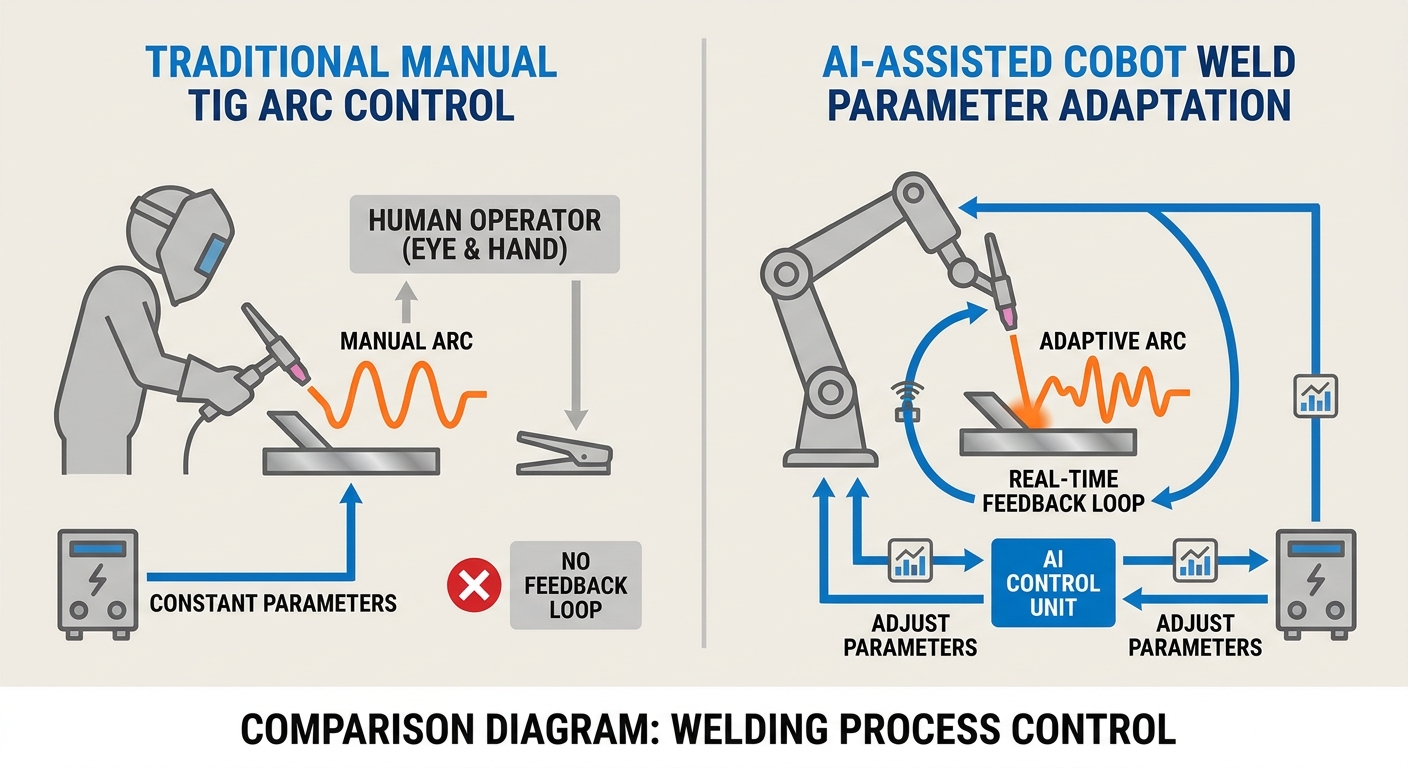
Check out our comprehensive Welding Technology & Process Guides to brush up on pulse TIG settings and arc control fundamentals.
🏗️ Trade Career Spotlight
Trane & SkillCat Step Up HVAC Apprenticeships
The trade gap is real, but real money and modernized training platforms are meeting the challenge head-on. Trane recently committed $1 Million to Goodwill skilled trades training programs, paired with expanded digital curriculum partnerships between SkillCat and top HVAC technical institutions.
For anyone looking to enter the HVAC/R field or contractors trying to build an internal training pipeline, here is what this means practically:
- Fast-Tracked EPA 608 Certification: Digital simulation platforms let apprentices complete refrigerant handling theory and virtual troubleshooting before ever touching a recovery unit or manifold gauge set.
- Paid Apprenticeship Grants: Institutional investments are funding stipend-backed boot camps, lowering the barrier to entry for prospective techs who cannot afford un-paid study time.
- Standardized Licensing Hours: Modern technical schools are aligning their lab hours directly with state licensing boards, allowing hands-on practical hours earned in boot camps to count straight toward journeyman prerequisites.
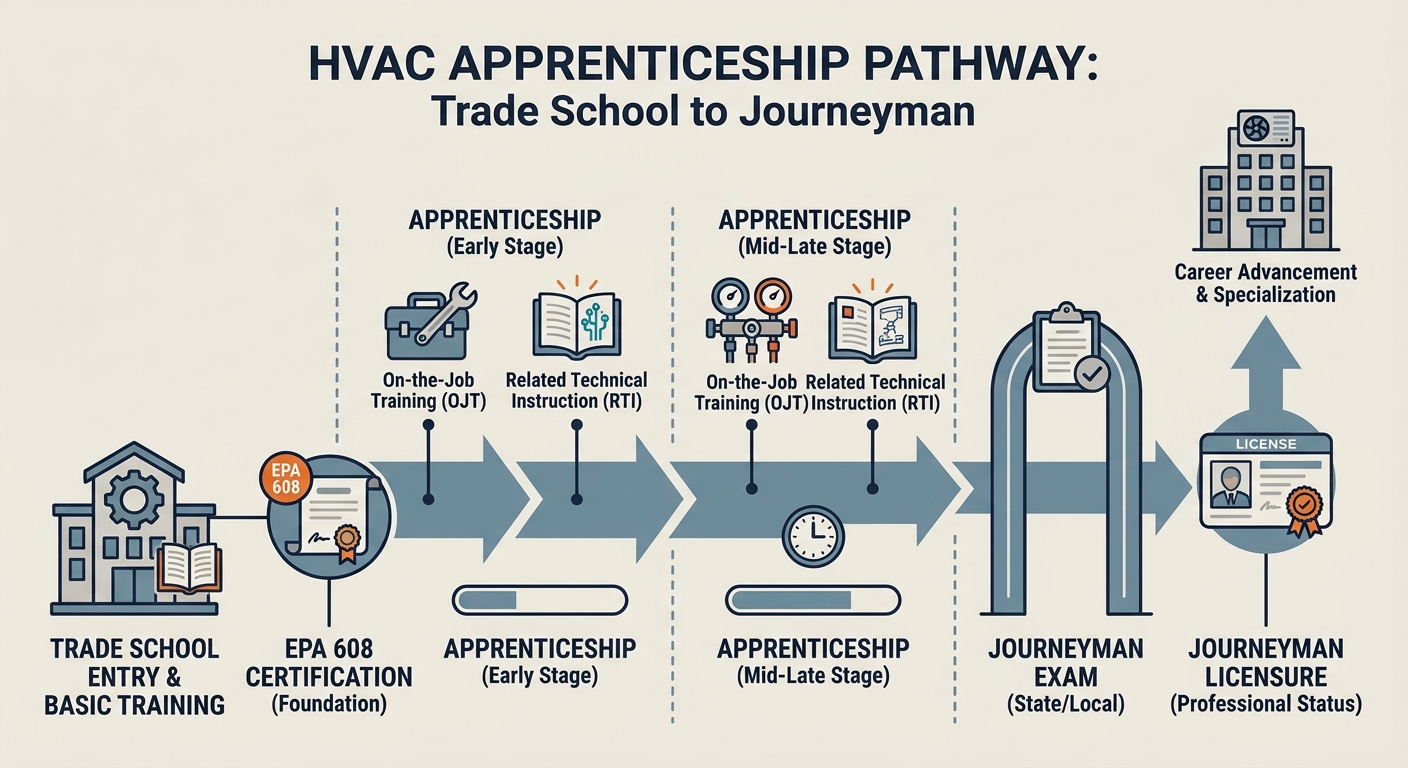
If you are evaluating a career transition or upgrading your field certifications, explore our HVAC & Mechanical Trades Path.
💰 Maker Mogul Corner
Turning Search Trends into Workshop Production
Understanding what buyers search for on platforms like Amazon and Etsy is the difference between custom furniture that sits in your garage and products that keep your CNC router running all week.
Recent search data shows sharp surges in demand for tailored home organization, personalized hardwood serveware, and modular workshop storage components. Here is how to translate raw search keywords into profit:
- Filter out noise: Ignore broad terms like "wooden tray." Target long-tail intent search phrases like "walnut charcuterie board with brass handles" or "french cleat tool organizer kit."
- Batch your workflow: When high search volume identifies a winning product, stop making them one-at-a-time. Set up dedicated jigs, pre-cut stock in 20-unit runs, and standardize your finishing station with fast-curing hardwax oils.
- Calculate True Cost: Never price solely on materials $\times 3$. Factor in shop overhead, blade wear, abrasives, packaging, and a base labor rate of at least $50/hour for skilled assembly.
$$\text{Retail Price} = (\text{Material Cost} + \text{Packaging} + (\text{Labor Hours} \times \text{Shop Rate})) \times 1.35 \text{ (Margin)}$$
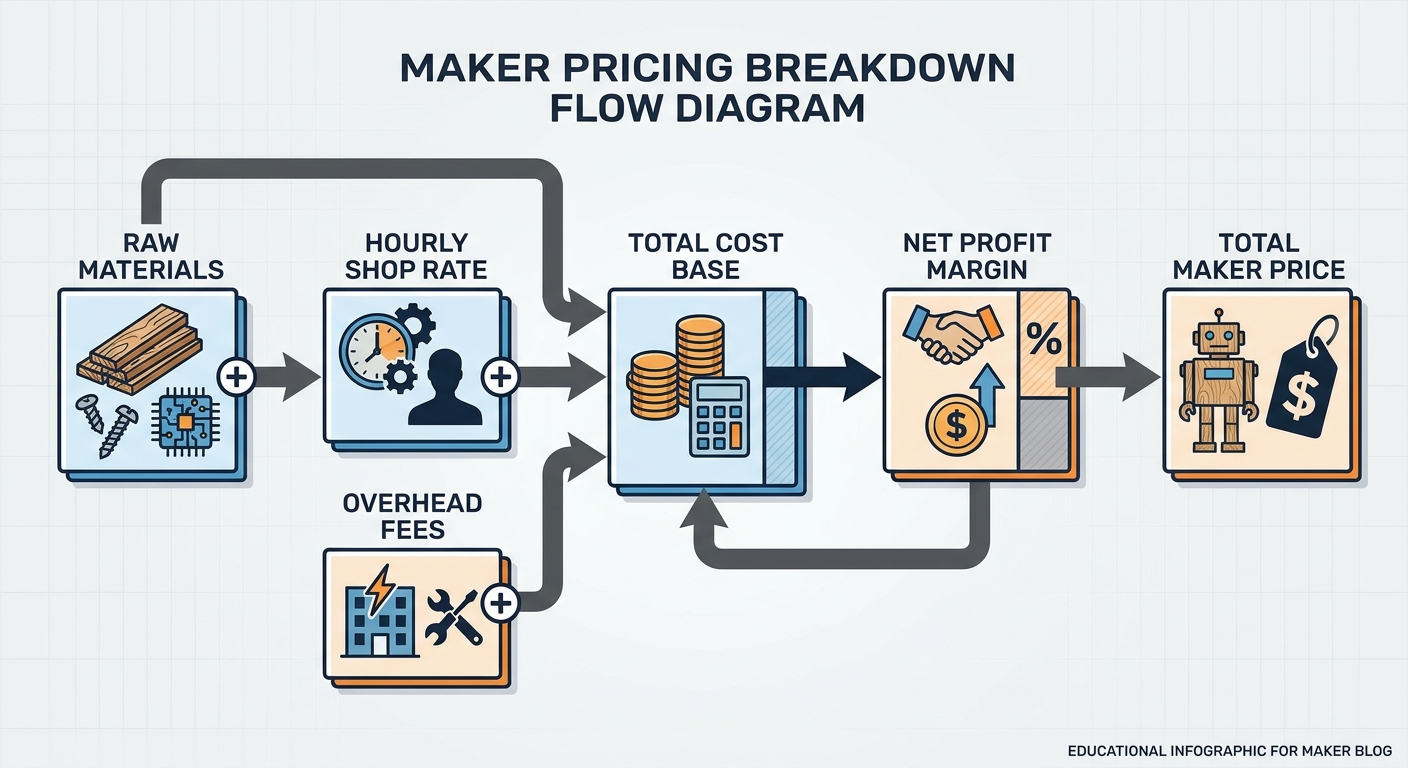
Looking to refine your production jigs and sales pipeline? Head over to the Maker Mogul Path for breakdown guides on batch pricing and client contract templates.
🛠️ DIY Mastery
Conquering Every Woodworker's Biggest Fear: Table Saw Kickback
Ask twenty woodworkers what keeps them up at night, and nineteen will tell you it is table saw kickback—that split-second moment when workpiece stock pinches against the back of the blade and launches back toward your chest at 100 mph.
You do not need to fear your saw, but you must respect the physics. Here is the shop-tested checklist to guarantee clean, safe rips every time:
[ Table Saw Alignment Checklist ]
1. riving knife alignment check (0.5mm clearance to blade teeth)
2. Fence parallel check (dial indicator variance < 0.002" toe-out)
3. Blade height set to 1/8" (3mm) above stock thickness
4. Push stick positioned between fence and blade centerline
5. Offcut clearance verified past the rear splitter- Riving Knife Alignment: Never operate a table saw without a dedicated riving knife that stays aligned with the blade during bevel and height adjustments. The gap between blade teeth and knife should sit strictly between 3mm and 8mm.
- Fence Parallelism: A fence that toes in toward the back of the blade is a kickback engine. Align your fence parallel to the miter slot, or set a subtle 0.001" to 0.002" toe-out away from the blade rear.
- Use the Right Push Stick: Throw away basic flat stick cutouts that only apply downward pressure at the rear. Use a continuous-friction push block (like a GRR-RIPPER or long wooden shoe stick) that maintains downward and forward pressure along the entire workpiece body.
- Never Use Miter Gauge & Rip Fence Together: If crosscutting stock, never trap wood between the miter gauge face and the rip fence without a dedicated stop block positioned ahead of the blade.
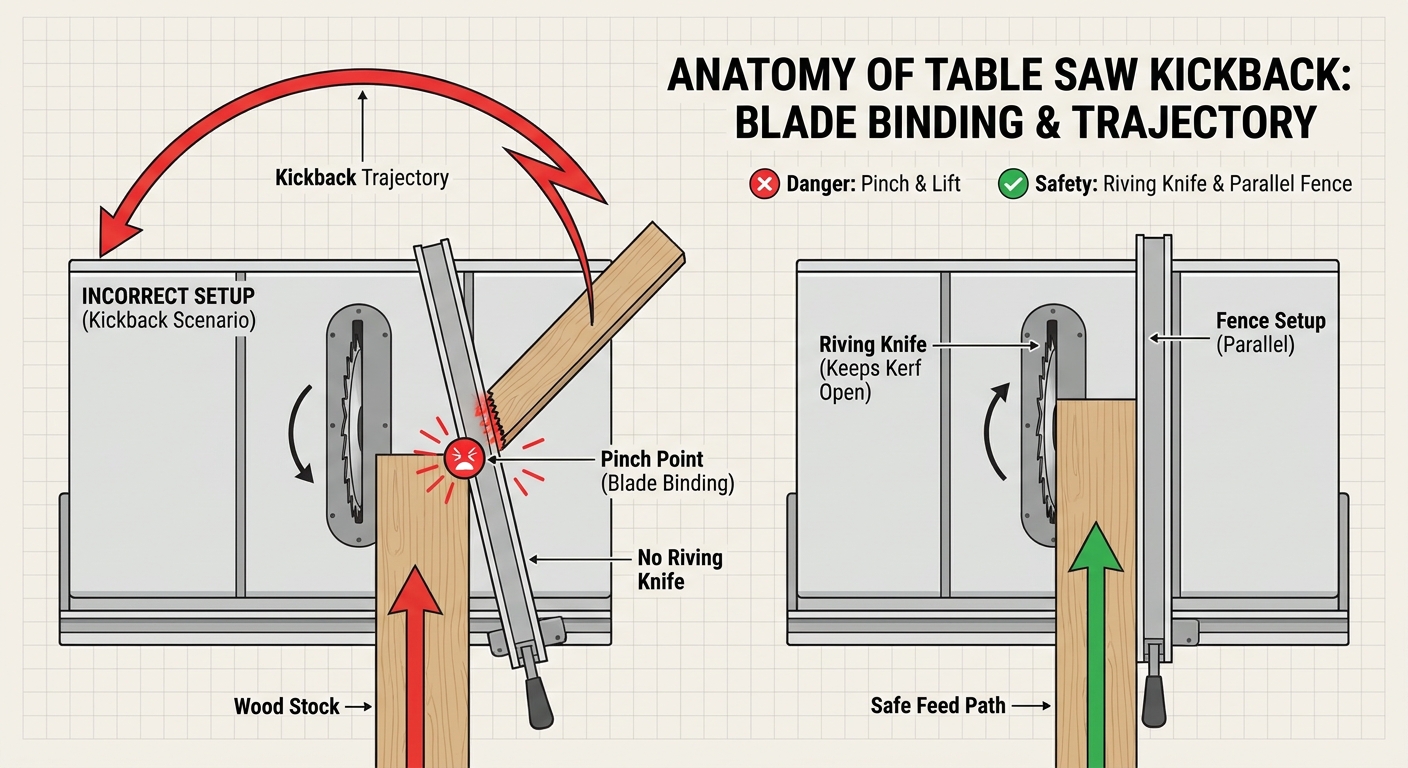
For step-by-step woodworking safety setups and shop jig plans, check out our DIY Mastery Path and browse our Build Plans Library.
Ready to Level Up Your Skills?
Whether you are clocking in on a commercial job site, shipping handmade goods, or dialing in your home workshop setup, TigerDen has built step-by-step roadmap
Read the full article on TigerDen.