
Published: November 20, 2026
From ESD-safe 3D printing filaments and sub-$1,000 toolchanger debuts to $100K trades scholarships and wood router selection, here is your Friday shop debrief. Learn how to protect sensitive electronics, preserve trade knowledge on the job site, and price custom builds for real profit.
Welcome back to the shop bench, makers and tradespeople. It is Friday, November 20, 2026. Grab a mug of black coffee while we break down what is moving across shop floors and job sites this week—from benchtop toolchanger debuts and electrostatic 3D printing filaments to national trades apprenticeship drives and real-world router selection.
🔧 Cool New Tools: Sub-$1K Toolchangers & Electrostatic-Safe PETG
First on the bench is major news out of Formnext. Elegoo has teased the Centauri X Ultra Toolchanger. We are looking at a fully enclosed desktop machine equipped with a hot end rated up to 350°C, pitched at a price point under $1,000. True multi-toolhead printing at that price tier eliminates the massive filament waste and slow print times of single-nozzle purge blocks. Heating up to 350°C allows you to process high-temperature engineering filaments like polycarbonate (PC), nylon (PA), and co-polyesters without nozzle creep, provided the enclosure maintains stable internal temperatures.
Speaking of specialized materials, Prusa Research has released Prusament PETG ESD Black ($52.69/kg). Electrostatic Discharge (ESD) safe filaments are not just decorative matte black plastics; they are engineered to safely bleed off static accumulation (surface resistance of 7.1 × 10⁵ to 1.6 × 10⁶ Ω) without the rapid spark discharges that destroy sensitive integrated circuits, microcontroller boards, or automotive sensor housing assemblies.
Prusa achieves this using a blend of carbon nanotubes (CNTs) and chopped carbon fibers. The chopped fibers add stiffness to the PETG matrix, reducing warp on large workbench trays and industrial enclosures.
ESD Filament Head-to-Head Comparison
| Filament | Price per kg | Surface Resistance | Reinforcement Package | Heat Deflection Temp (HDT) |
|---|---|---|---|---|
| Prusament PETG ESD | $52.69 | 7.1 × 10⁵ – 1.6 × 10⁶ Ω | Carbon Nanotubes + Chopped Carbon Fibers | Not Published |
| Polymaker Fiberon PETG-ESD | $65.98 | 4.7 × 10⁵ Ω/sq at 270°C | Carbon Nanotubes | 76°C |
| Raise3D Industrial PETG ESD | $99.99 | 4.7 × 10⁵ Ω/sq at 270°C | Carbon Nanotubes | 76°C |
| 3DXTech 3DXSTAT ESD-PETG | $140.00 | 10⁷ – 10⁹ Ω/sq (TDS) | Multiwall Carbon Nanotubes | 75°C |

Explore more equipment specs in our Tools Directory or level up your additive manufacturing in Techniques.
🏗️ Trade Career Spotlight: Knowledge Retention & $100K Trades Scholarships
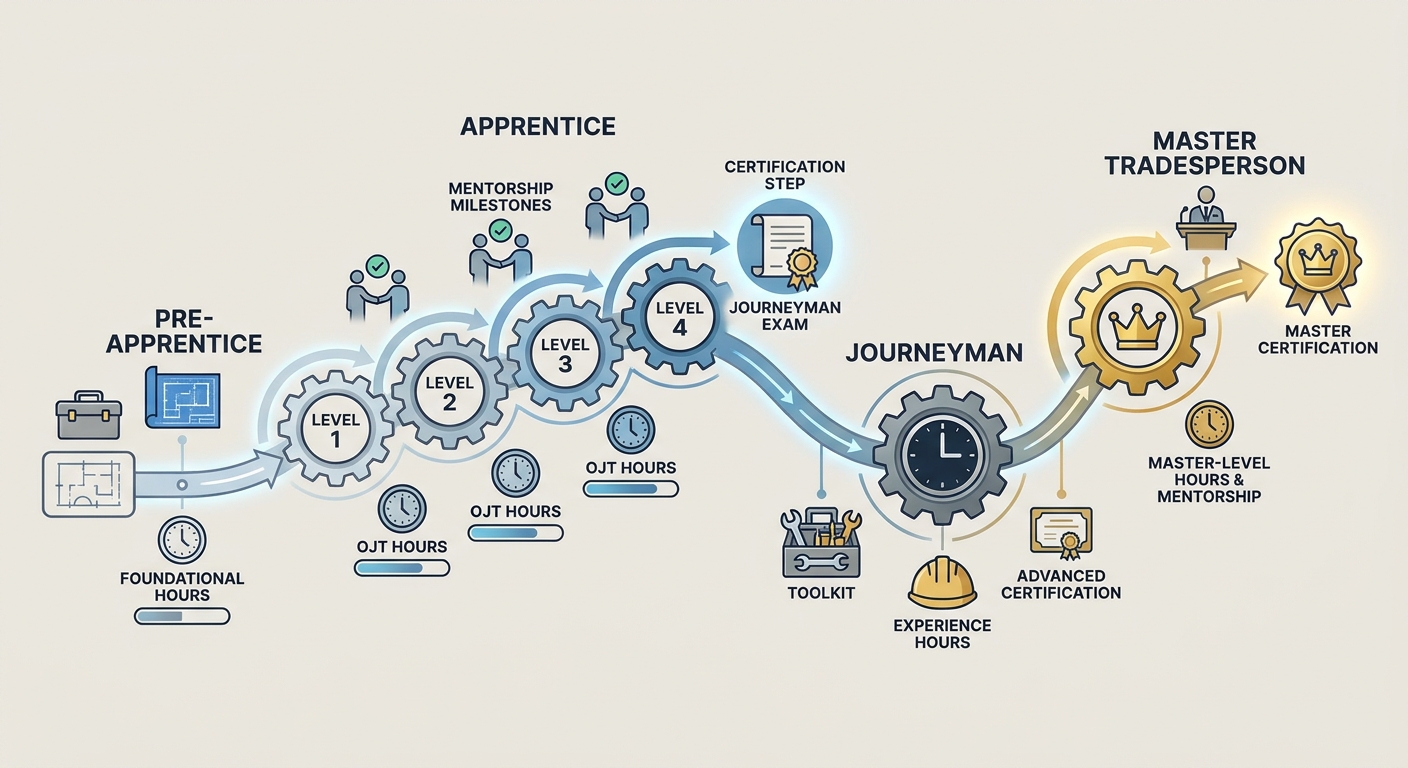
Massive apprenticeship drives are sweeping the industry: state programs are pushing to register 100,000 new apprentices by 2036, while broader national coalitions aim to prepare one million skilled-trades workers by 2035.
However, recruiting apprentices is only half the battle. The critical bottleneck facing electrical, plumbing, HVAC, welding, and machining sectors is preserving master trades knowledge. As thousands of veteran journeymen reach retirement age, decades of unwritten field wisdom—like diagnosing transient harmonic distortion on VFD drives or adjusting torch angles on out-of-position root passes—risk vanishing from job sites. Field mentorship programs must bridge this gap by pairing apprentices with senior mechanics directly on commercial installs.
On the funding side, Schneider Electric has partnered with trades non-profits to launch a $100,000 trades scholarship initiative. Programs like this help incoming students cover tool-set costs, licensing exam fees, and baseline safety equipment, allowing apprentices to step onto the job site without taking on high-interest debt.
Looking to start an apprenticeship or prepare for licensing in electrical, HVAC, plumbing, or machining? Check out our dedicated breakdowns on The Trades Path.
💰 Maker Mogul Corner: Instagram Brand Building (No AI Gimmicks)
If you run a custom woodworking shop, metal fabrication studio, or handmade goods brand, social media can feel like an unwanted distraction from cutting mortises or burning rod. But algorithmic shifts favor authentic craftspeople over generic, AI-generated video clips.
Here is what is driving actual commissions and shop sales:
- DM Shares Over Vanity Likes: Social algorithms now heavily prioritize content shared via direct messages. Post practical, problem-solving clips—such as how to repair blow-out on grain or select drawer slide clearances—because fellow woodworkers and homeowners share useful tips directly with friends.
- Trial Reels for Cold Reach: Instagram's Trial Reels display your content to non-followers first. Keep your visual hook under 3 seconds: show sparks flying off the grinding wheel or finish popping maple grain immediately.
- Transparent Build Carousels: Deep-dive image slides showing material selection, joinery details, and realistic project costs build concrete buyer trust.
- Natural Shop Audio: Crisp, ambient shop noise—the clean cut of a sharp hand plane, the steady hum of a lathe, or the crisp crackle of a MIG arc—consistently outperforms generic stock audio tracks.
When pricing custom work, stop guessing. Calculate your raw materials, add direct labor hours (billed at a sustainable shop rate of $50–$100+/hr), factor in fixed overhead percentage, and add a 20% net profit margin.
Ready to turn your shop output into a sustainable commercial operation? Explore business tools on the Maker Mogul Path.
🛠️ DIY Mastery: Router Selection & Workbench Welding Setup
Early Black Friday tool sales are cutting prices by up to 55% on bench power tools. Before buying, make sure you match the motor specs and base style to your project needs:
Matching the Wood Router to the Task
- Trim Routers (Compact, 1 to 1.25 HP): Ideal for edge profiling, light chamfers, roundovers, and flush-trimming laminates. Easy to control one-handed for detail work.
- Mid-Size Routers (2 to 2.25 HP): The ultimate shop workhorse. Plunge and fixed base combo kits handle dados, mortises, pattern routing, and table mounting. Look for electronic variable speed (10,000–22,000 RPM) to match bit diameter—large panel-raising bits must run at lower speeds to prevent burning the timber.
- Heavy-Duty Routers (3+ HP): Built primarily for permanent router table installations or timber framing beam joinery.
Weekend Welding Prep Tip
If you are firing up a MIG or TIG welder for weekend fabrication:- Clean to Bare Metal: Grind hot-rolled mill scale, paint, and rust off your joint areas using a 36-grit flap disc down to bright steel within 1 inch of the weld zone. Contaminants are the primary cause of porosity and cold-lapping.
- Helmet Setup: Verify your auto-darkening helmet is set to the correct shade (Shade 10–11 for standard MIG/TIG work up to 150A) and check that the cover lens is free of spatter pitting.
![Wood router bit diameter versus safe operating RPM chart showing speed adjustments for safe cutting](https://tigerden.app/storage/v1/object/publ
Read the full article on TigerDen.