
Published: November 17, 2026
Get the lowdown on small-scale 3D print PLA recycling, industrial network isolation for electricians, pricing strategies for handmade ceramics, and shop setup tips for weekend metal fabrication.
Welcome back to the workbench for Tuesday, November 17, 2026. Whether you are running conduit on a commercial site, dialing in batch pricing for your small studio, or prepping your fabrication setup for winter projects, we have got fresh insights straight from the trade floor and shop floor.
Pull up a stool, grab a mug of black coffee, and let's get down to brass tacks.
🔧 Cool New Tools: Closing the Loop on 3D Print Recycling
Every shop running FDM printers ends up with the dreaded "spaghetti bucket"—a bin packed full of failed rafts, support structures, and prototype scraps. Polylactic Acid (PLA) is technical bioplastic, but municipal recycling programs won't touch it. That waste normally heads straight to a landfill unless you close the loop yourself.
Desktop recycling setups—like those developed by industrial partners such as Filabot—are bringing closed-loop filament production directly into home workshops and school makerspaces.
How Small-Scale PLA Recycling Works:
- Granulation: Scrap prints must be ground down into uniform 2mm to 4mm pellets using a mechanical granulator or heavy-duty shredder. Irregular chunk sizes lead to uneven melting and nozzle jams downstream.
- Drying: PLA is hygroscopic. Scrap absorbs ambient moisture quickly, which causes hydrolysis during remelting (leading to brittle filament). Heat your granulate at 60°C (140°F) for at least 4 hours before processing.
- Extrusion & Diameter Control: The granulate passes through a single-screw extruder set between 175°C and 190°C. Maintaining a consistent diameter (typically 1.75mm ±0.05mm) requires a puller mechanism paired with an optical laser sensor.
If you run high-volume 3D printing for jigs or prototypes, investing in scrap processing saves real dollars over a shop season. Check our /tools directory for teardowns on filament extruders and granulators.
🏗️ Trade Career Spotlight: Industrial Network Cyber & NECA Takeaways
For sparkies working commercial and industrial service, the job description expanded years ago. Modern commercial facilities aren't just running high voltage; they run integrated building management systems (BMS), programmable logic controllers (PLCs), and smart power distribution.
Keeping OT Separated from IT
At recent industry gatherings like the National Electrical Contractors Association (NECA) Show, one clear trend dominated panel discussions: Cybersecurity at the physical and hardware level.Electricians installing smart gear, network-connected breakers, and industrial gateways must understand operational technology (OT) network isolation.
- VLAN Segmentation: Never mix building control systems (HVAC controllers, lighting relays) on the corporate Wi-Fi or general office LAN. Put OT assets on isolated Virtual LANs with strict ingress/egress rules.
- Physical Port Lockouts: In industrial panels, open RJ45 ports on unmanaged switches are security vulnerabilities. Install physical port locks and disable unused ports on managed switches.
- NECA Tool Floor Highlights: Keep an eye out for hybrid electrical testers coming onto the market that combine traditional CAT IV 1000V digital multimeter functions with basic Ethernet cable certification and IP address Discovery. It lets a single wireman verify both power supply and network connectivity without pulling out a second kit.
Learn more about licensing standards, controls wiring, and industrial field work at /paths/trades/electrical.
💰 Maker Mogul Corner: Capitalizing on the $20–$60 Ceramics Market
Industry forecasts through 2035 point to steady growth in personalized, handmade hardgoods, with unique home goods leading the charge. If you produce pottery, ceramics, or wood-turned homeware, the sweet spot for rapid inventory movement sits firmly between $20 and $60 per piece.
A custom wheel-thrown ceramic mug or desktop planter costs minimal raw clay and glaze, but your true cost lies in kiln space, firing cycles, and shop rate.
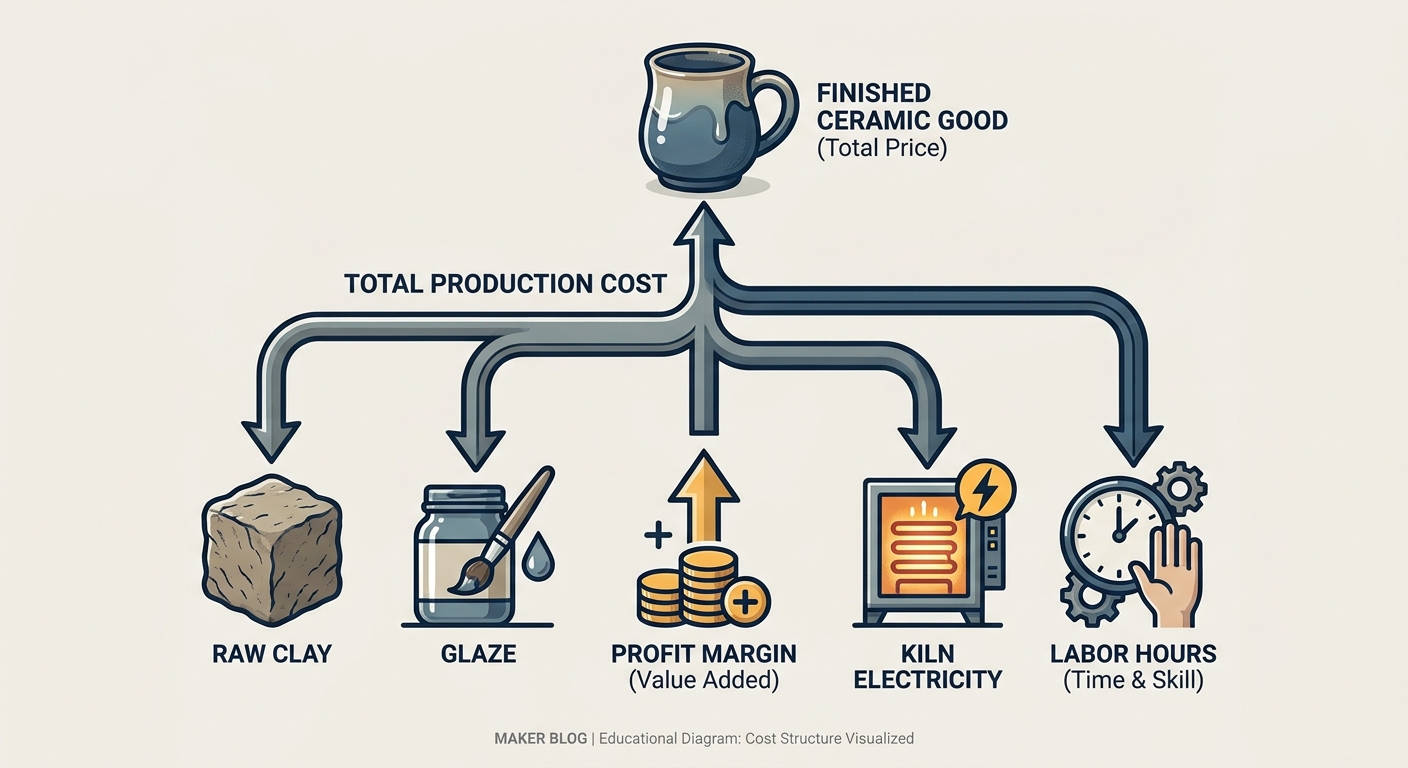
Pricing and Production Math for Ceramic Mugs:
- Raw Materials (Clay + Glaze): $1.50 – $2.50
- Bisque & Glaze Firing (Electricity/Gas amortized): $1.75 per piece (based on a full kiln load)
- Direct Labor (Throwing, trimming, handling, glazing): 20 minutes total at $30/hr target rate = $10.00
- Total COGS: ~$13.75
- Wholesale Price (2x COGS): $27.50
- Retail Price (4x COGS / Market Target): $45.00 to $55.00
Key Production Strategies:
- Batch Your Processes: Never throw one piece at a time. Throw 20 identical mug bodies in one sitting to dial in muscle memory and keep dimensions consistent.
- Maximize Kiln Real Estate: Kilns cost the same amount of electricity to fire whether half-full or packed tight. Use modular furniture and drop posts to stack shelves efficiently.
- Focus on Touchpoints: Buyers evaluate handmade pottery by handle comfort, lip thickness, and bottom weight. A well-balanced rim lets you charge $50 for a mug that took the same raw materials as a sloppy $20 equivalent.
For deeper breakdowns on pricing formulas, batch workflows, and retail margins, explore /paths/maker.
🛠️ DIY Mastery: Early Tool Sales & Live Fabrication Setups
With mid-November sales rolling in up to 55% off list prices on major retail channels, now is the time to stock up on consumables, angle grinders, and entry-level MIG/TIG welders for weekend builds.
If you're jumping into metal fabrication or putting together a dedicated welding corner in a two-car garage, here is how to maximize your rig without wasting shop space.
Building a Heavy-Duty Mobile Fab Table:
- Tabletop Material: Use a minimum 3/8-inch (9.5mm) hot-rolled steel plate. Thinner sheet metal (like 1/8-inch) will warp under high heat during heavy clamping and tackling.
- Frame Specs: Build the main structure from 2" x 2" x 3/16" square structural tubing.
- Corner Bracing: Always weld gussets or 45-degree diagonal braces at the leg-to-top junctions to prevent racking when hammering or bending stock in a vise.
- Locking Casters: Install 4-inch heavy-duty polyurethane casters rated for at least 300 lbs each, featuring dual-locking mechanisms (locking both wheel rotation and swivel axle).
Before firing up the torch, review proper joint prep, bevel angles, and gas flow rates in our /techniques section, or download complete project blueprints over at /build-plans.
Ready to Level Up Your Craft?
Whether you are aiming for a master electrician license, launching an artisan product line, or dialing in your home workshop, TigerDen has the blueprints and mentor networks to get you there.
- Explore structured learning tracks at /paths
- Master shop skills across trades at /paths/trades
- Run a profitable maker business at /paths/maker
- Tackling practical home & shop builds at /paths/handyman
Keep your tools clean, your cuts square, and your eyes on the work.