
Published: November 16, 2026
TigerDen Daily covers Arc Welding's new 4-pack multi-process rack systems, PHCC's 2026 Plumbing Apprentice of the Year award, multi-channel strategies for maker businesses, and beginner router selection tips for weekend builders.
Welcome back to the workbench, makers. It's Monday, November 16, 2026, and we're kicking off another week at TigerDen Daily with concrete shop advice, career updates, and practical builds across The Trades, Maker Mogul, and DIY Mastery. Grab a fresh cup of coffee, check your safety glasses, and let's get into it.
🔧 Cool New Tools: Heavy-Duty Multi-Power Racks & Laser Welding Shifts
If you run a structural shop or a busy jobsite, cable management and floor space are constant battles. Arc Welding’s latest equipment releases hit two critical points: shop mobility and industrial throughput.
1. Heavy-Duty Multi-Process Welding Racks
Managing four separate welding power sources on a fabrication floor creates a web of primary power cables and ground leads. The newly released four-pack rack system packages four heavy-duty inverter power sources into a single rolling footprint measuring 42.25 in. wide x 29.75 in. deep x 60.5 in. high, coming in at a total weight of 1,010 lbs.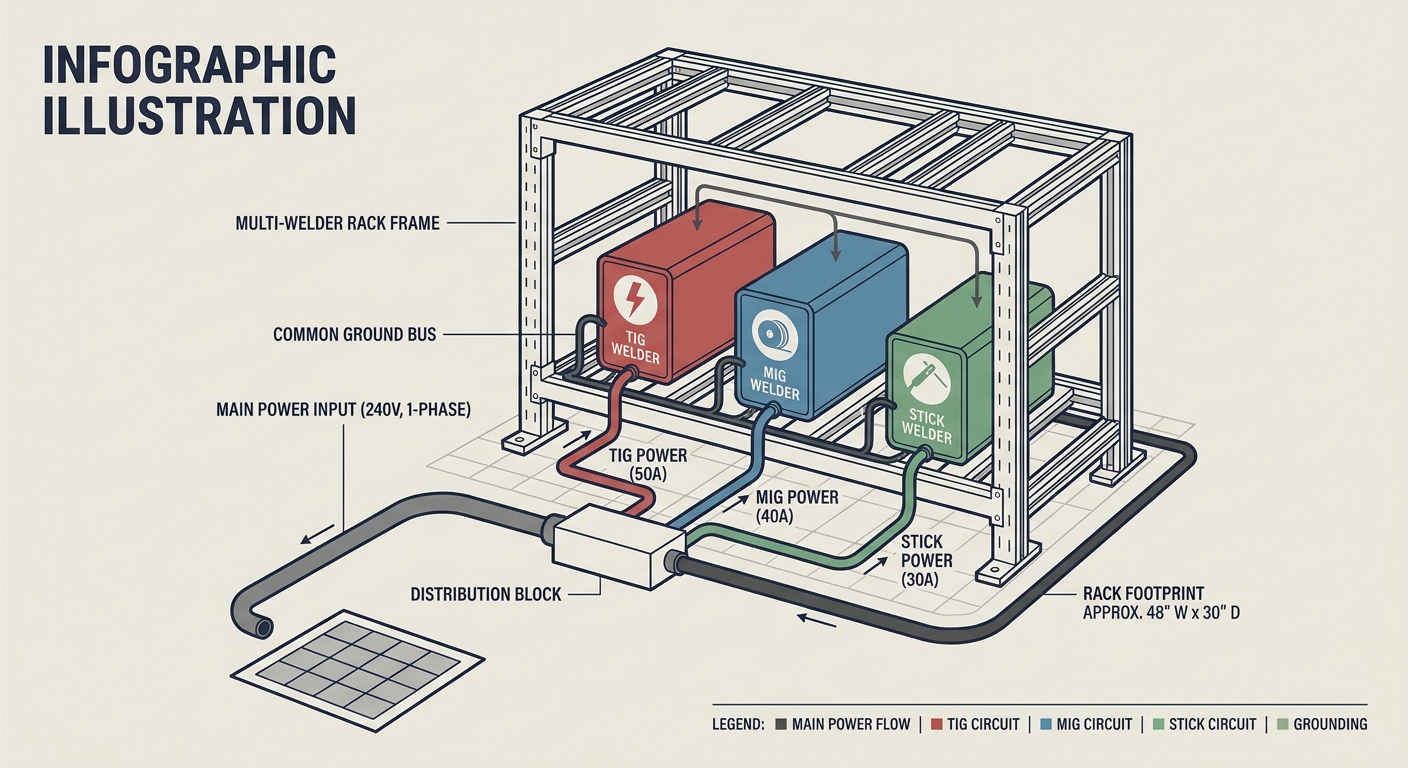
- Power Hookup Realities: Running four machines off a single drop requires verifying your main panel breaker specs. Ensure your shop branch circuit supports the combined rated input current, or run a single heavy-gauge 3-phase feeder to the rack’s internal power distribution block.
- Footprint Efficiency: At under 3 feet deep, this rack slides neatly against shop partition walls or mounts securely into structural service trailers for field assembly work.
2. Autonomous Fixtureless Welding Cells & Thick-Plate Lasers
Automated welding continues to drop the barrier for short-run production. Recent setups showcase vision-guided robotic arms that weld complex assemblies without rigid, expensive custom fixturing. The robot scans the joint geometry in real-time, adjusts torch angles, and compensates for fit-up gaps on the fly.Simultaneously, high-power handheld laser welding systems (like TRUMPF’s recent thick-steel component advancements) are moving into heavier plate applications. While traditional MIG delivers deep penetration on 1/2-inch plate, laser systems reduce total heat input by up to 70%, virtually eliminating heat-affected zone (HAZ) distortion on precise structural fabrications. Check out our detailed guides in the Techniques Library for heat management protocols.
🏗️ Trade Career Spotlight: Plumbing Apprentice Benchmarks & Mentorship
Success in the trades isn't built overnight—it’s forged through thousands of hours of field work, code studies, and standard work practices.
PHCC Names Daniel Boyles 2026 Apprentice of the Year
The Plumbing-Heating-Cooling Contractors—National Association (PHCC) officially recognized Virginia’s Daniel Boyles as the 2026 Plumbing Apprentice of the Year. Boyles completed a rigorous four-year apprenticeship program combining hands-on field hours with rigorous code mastery.
A standard 4-year plumbing apprenticeship path requires commitment:
- 8,000 Hours On-The-Job Training (OJT): Working under a master plumber on commercial DWV (drain, waste, vent) systems, gas piping, and potables.
- 576 Classroom Hours: Deep-diving into the International Plumbing Code (IPC) or Uniform Plumbing Code (UPC), isometric blueprint reading, and pipe sizing calculations.
Industry Backing: Expanding Vocational Scholarships
In tandem with Boyles’ recognition, industry advocates Daniel and Denise Callies joined the PHCC Educational Foundation to fund expanded scholarship pools, technician training modules, and contractor business education.If you are looking to enter the trade, transition careers, or hire apprentices for your own crew, head over to The Trades: Plumbing Path to review state licensing requirements, apprenticeship application timelines, and fundamental pipefitting skills.
💰 Maker Mogul Corner: Multi-Channel Sales & Higher Margins
Relying entirely on a single third-party marketplace leaves your craft business vulnerable to unexpected algorithm shifts, fee hikes, and account suspensions. Successful maker businesses build diversified sales ecosystems.
Moving Beyond Single Platforms
While platforms like Etsy or Amazon Handmade offer immediate search traffic, relying on them exclusively limits your long-term enterprise value.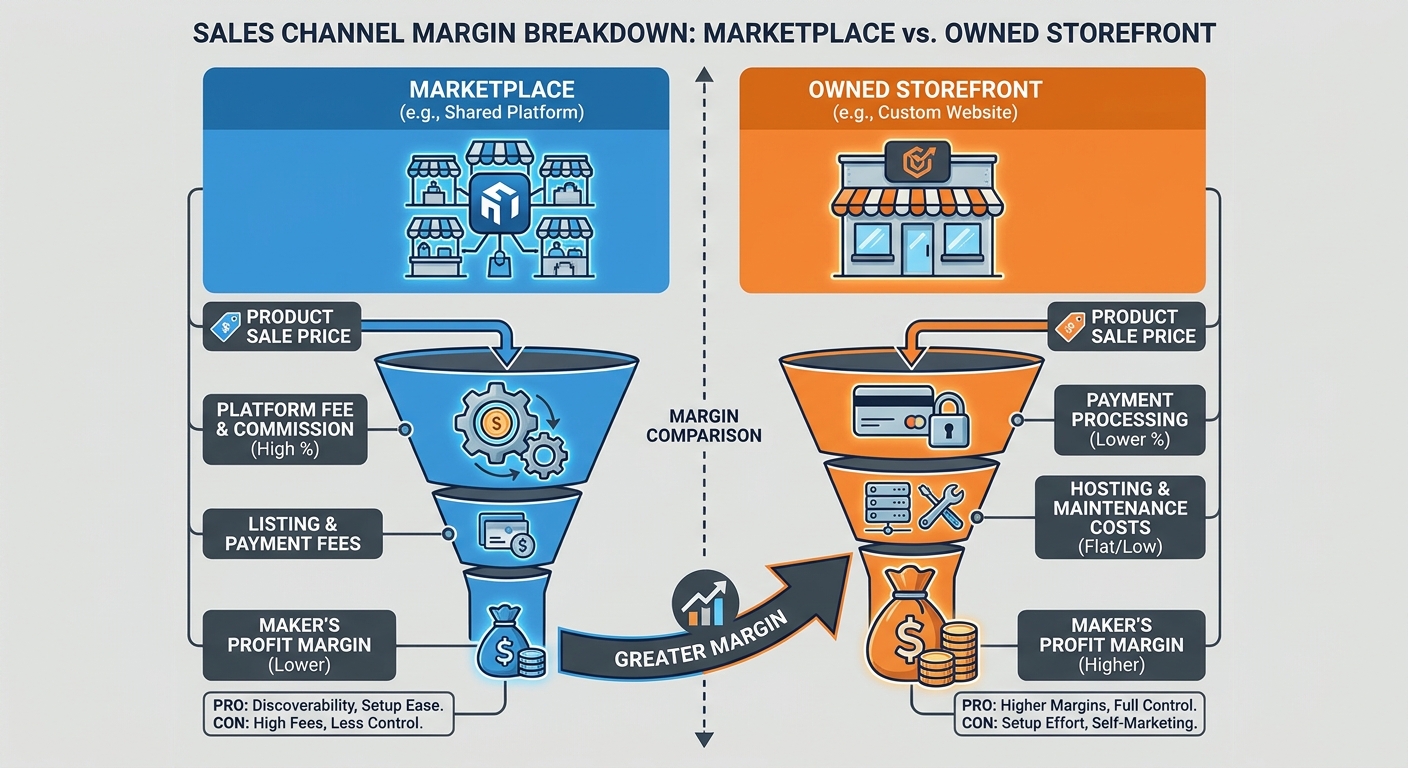
- Own Your Web Presence: Launching your own direct storefront (using platforms like Shopify) gives you full control over customer email lists, custom branding, and zero marketplace listing fees.
- Local B2B & POS Sales: Integrate mobile Point of Sale (POS) hardware for weekend markets, pop-up shops, and local retail consignment.
- High-Margin Product Mix: Instead of low-ticket items ($15 keychains or basic bookmarks), focus on high-margin, scalable products:
Real-World Pricing Formula
Never guess your prices. Use this standard shop formula:$$\text{Base Cost} = \text{Materials} + \text{Labor (\$35–\$65/hr)} + \text{Shop Overhead}$$
$$\text{Wholesale Price} = \text{Base Cost} \times 1.5 \text{ to } 2.0$$
$$\text{Retail Price} = \text{Wholesale Price} \times 2.0$$
Want to streamline your small batch production? Explore our business strategies in the Maker Mogul Path.
🛠️ DIY Mastery: Navigating Tool Sales & Choosing Your First Router
With early Black Friday tool promotions hitting the market, it’s easy to get distracted by flashy tool bundles. Buy for build quality, duty cycle, and spindle accuracy—not low price tags.
Choosing the Right Wood Router for Your Shop
If you are adding a router to your woodworking setup this season, match the machine to your intended jointing and profiling needs:
| Feature | Compact/Trim Router (1.25 HP) | Mid-Size Router (2.25 HP) |
|---|---|---|
| Primary Use | Edge profiling, hinge mortising, flush trimming | Heavy dadoes, raised panels, joinery |
| Collet Capacity | 1/4 inch only | 1/4 inch & 1/2 inch |
| Base Type | Fixed base (plunge bases available on select models) | Dual base (swappable fixed and plunge bases) |
| Shop Recommendation | Ideal for handheld precision work | Essential for router table mounting |
Workbench Tip: Router Bit Care
- Avoid Cheap Bit Sets: Bargain 30-piece router bit sets often use low-grade carbide that dulls quickly, overheats, and burns end-grain. Buy high-quality carbide-tipped bits individually as project plans require.
- Maintain Clean Collets: Sawdust build-up inside the collet cone reduces gripping force and causes bit slippage or tear-out. Wipe collets clean with brass wire brushes and solvent after every major cutting session.
Looking for your next weekend build project? Check out our step-by-step guides in Build Plans or upgrade your shop layout via the DIY Mastery Path.
Explore the TigerDen Learning Paths
Ready to take your skill set to the next level? Pick your track and start building:- 🛠️ The Trades – Professional pathways in Electrical, Plumbing, HVAC, Welding, and Machining.
- 📈 Maker Mogul – Turn your shop passion into a profitable commercial enterprise.
- 🔨 DIY Mastery – Weekend project gu
Read the full article on TigerDen.