
Published: November 3, 2026
This edition covers Black Friday drops on 3D printing and scanning gear, the NEC rules differentiating GFCI and AFCI circuit protection, batch pricing models for handmade products, and techniques for hollow timber beams and steel-framed decking. Stay sharp on the job site and in the workshop with practical specs and trade insights.
Pull up a stool, grab a mug of shop coffee, and welcome back to the bench. Today is Tuesday, November 3, 2026, and we have a heavy lineup spanning precision scan tech, code-compliant residential wiring, high-margin maker strategies, and advanced fabrication on the shop floor.
🔧 Cool New Tools
Early Black Friday sales are hitting early this year, bringing genuine production upgrades down to entry-level pricing. If you’ve been waiting to expand your prototyping setup or batch-production capacity, now is the time to audit your equipment budget.
Bambu Lab X2D Drops to $589
Bambu Lab kicked off their Black Friday event (running through December 1, 2026), marking down the X2D to $589. If you are stocking up on production material, their filament discounts scale heavily in volume: starting at 10% off for two spools up to 35% off when ordering 10 or more spools. If you run a print farm producing jig fixtures, end-use parts, or consumer goods, bulk ordering engineering PLA, PETG, or ABS right now drastically lowers your cost-of-goods-sold (COGS).Snapmaker U1 Drops to $699
Snapmaker is throwing serious competition into the mid-size desktop space with the Snapmaker U1 at $699. The standout spec here isn't just the build volume—it’s the four independent toolheads (IDEX/multi-head configuration) equipped with filament autoloading. Multi-toolhead setups blow standard single-nozzle multi-material splitters out of the water because they eliminate the massive purge blocks and endless retraction cycles. For makers running soluble support materials (like PVA) alongside main structural filaments, this setup cuts print times down significantly while saving filament waste.Elegoo M1 Ultra 3D Scanner ($1,599 Preorder)
Elegoo is pushing hard into digital capture with the M1 Ultra 3D Scanner, currently open for preorders at $1,599. Unlike basic optical scanners that struggle with reflective metal or dark plastics, the M1 Ultra features both multiple laser modes and structured infrared for capturing complex geometry. Combined with 24-bit color texture mapping, this allows you to scan physical castings, engine components, or hand-carved master pieces directly into CAD with sub-millimeter accuracy for rapid reverse engineering.🏗️ Trade Career Spotlight
[Electrical] GFCI vs. AFCI: Code Rules, Operation, and Placement
Understanding the difference between Ground Fault Circuit Interrupters (GFCI) and Arc Fault Circuit Interrupters (AFCI) isn't just about passing municipal inspection; it’s about understanding the exact physics of electrical hazards and protecting both lives and structures.
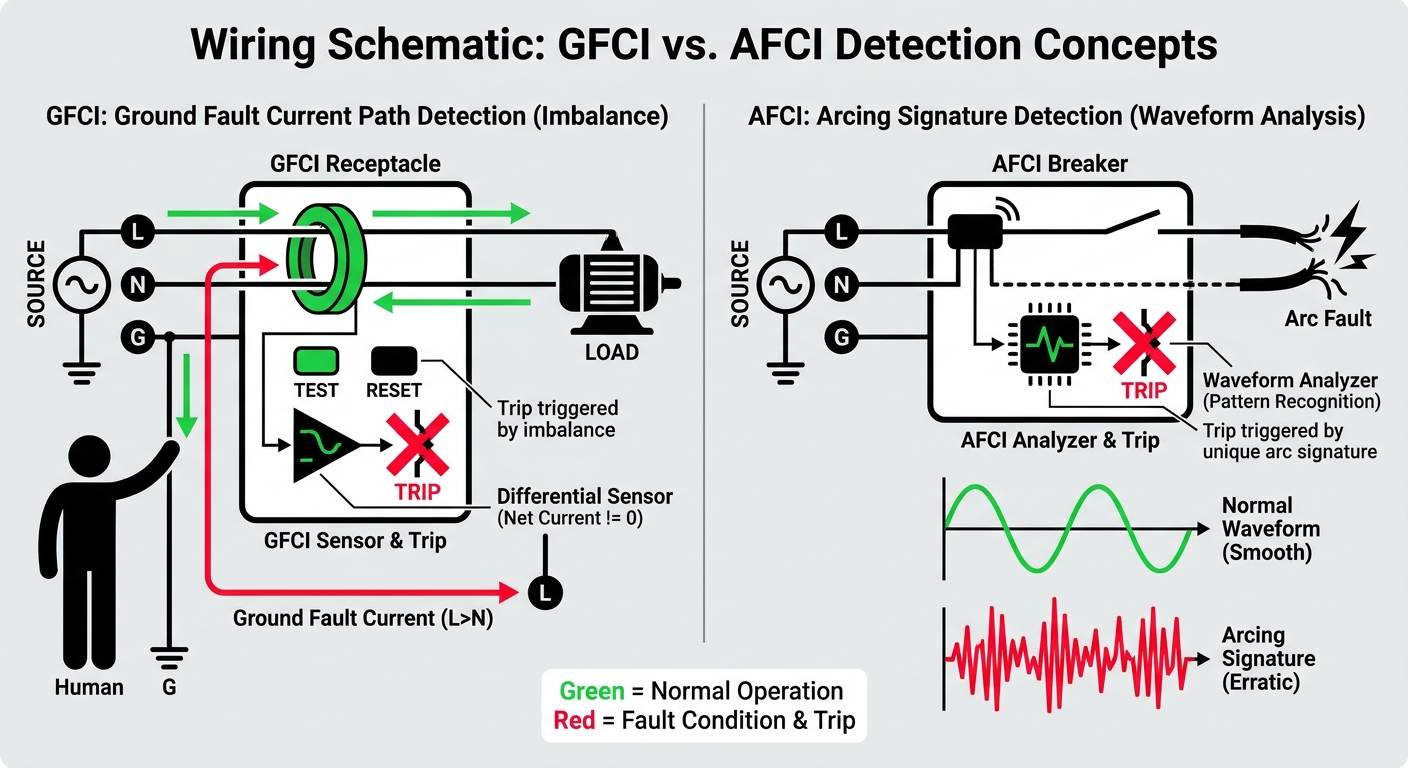
Ground Fault Circuit Interrupters (GFCI) – NEC 210.8
- Primary Function: Protects people from lethal shock hazard.
- How It Works: A GFCI continuously monitors the current balance between the ungrounded (hot) and grounded (neutral) conductors. Under normal operation, the current flowing out on the hot wire equals the current returning on the neutral wire. If a leakage current as small as 4 to 6 milliamperes (mA) flows through an unintended path (such as a person holding a faulty tool while touching a wet grounded surface), the differential transformer inside the device trips the circuit in as fast as 1/40th of a second.
- Where Required: Any location where water or dampness lowers human skin resistance. This includes bathrooms, kitchens (countertop receptacles), outdoors, unfinished basements, crawlspaces, garages, and within 6 feet of sinks or water sources.
Arc Fault Circuit Interrupters (AFCI) – NEC 210.12
- Primary Function: Protects structures from electrical fires caused by arcing.
- How It Works: AFCI devices contain advanced signal processing microcontrollers that analyze the current waveform. They look for the high-frequency noise and sudden drop in current characteristic of an electrical arc—such as a drywall screw piercing a Romex cable inside a wall cavity, or a damaged appliance cord arcing under a rug.
- Where Required: Almost all residential living areas, including bedrooms, family rooms, dining rooms, hallways, closets, and parlors.
Pro Shop Tip: Dual-Function Breakers
When NEC code requires both GFCI and AFCI protection on the same circuit (for example, a kitchen branch circuit), install a Dual-Function Circuit Breaker (AFCI/GFCI) right at the load center. It simplifies troubleshooting and saves box-fill space in the field compared to running downstream dead-front or receptacle units.💰 Maker Mogul Corner
Capitalizing on the 2026 Handmade Market & Batch Pricing Mechanics
Market intelligence reports through 2035 confirm that demand for personalized, handmade goods remains a steady driver, contributing a +1.8% CAGR boost in total market size. Buyers are moving away from disposable mass production and actively seeking durable, customized products with authentic origin.
However, high demand doesn't automatically mean profit. To turn workbench hours into cash flow, you must design your catalog around batch efficiency and repeatable personalization.
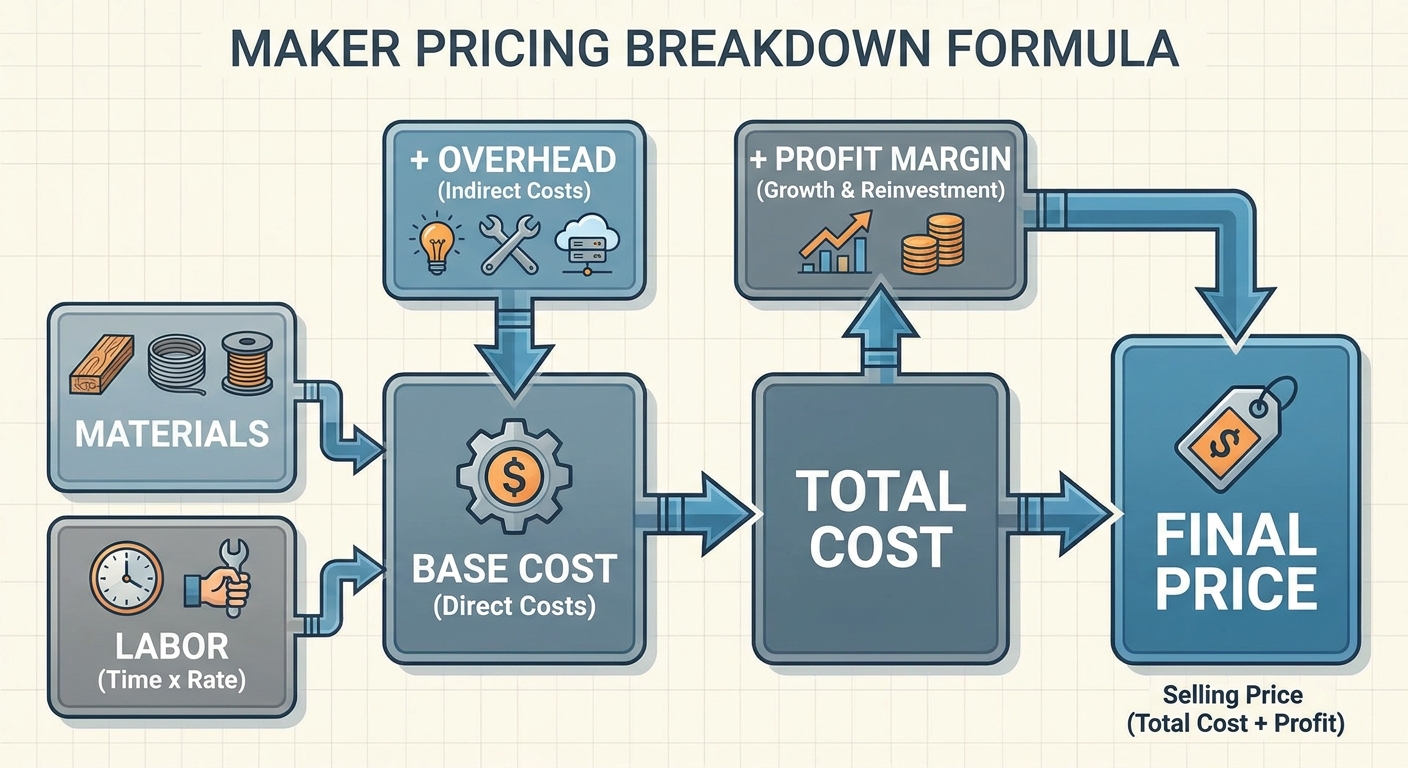
The 3 Rules of High-Margin Handmade Products
- Fixtured Personalization: Offer laser-engraved initials, custom CNC inlay work, or stamped brass tags. Keep the core product 90% standardized, applying the custom detail in the final step using fixed jigs.
- Gifting Compatibility: Products under 5 lbs with standardized outer packaging dimensions cut shipping overhead and appeal heavily to holiday impulse buyers.
- Low Setup-to-Run Ratio: If setting up your table saw or CNC takes 45 minutes, you must produce at least 25-50 units per run to dilute the setup labor across the entire batch.
The TigerDen Shop Pricing Formula
Stop guessing your prices based on Etsy listings. Use this strict shop floor calculation:$$\text{Base Cost} = \text{Raw Materials} + \text{Consumables (blades, sandpaper, finish)} + (\text{Shop Rate per Hour} \times \text{Labor Hours})$$
$$\text{Wholesale Price} = \text{Base Cost} \times 1.5 \text{ to } 2.0$$
$$\text{Retail Price (MSRP)} = \text{Wholesale Price} \times 2.0$$
If your retail price doesn't cover your fully burdened shop rate (which includes electricity, lease, machine depreciation, and taxes), you are running a charity, not a commercial enterprise.
🛠️ DIY Mastery
Hollow Beam Fabrication, Epoxy Glassing, and Steel-Framed Composite Decks
Whether you are upgrading an interior living space or building outdoor structures, applying commercial trades techniques elevates your finished projects from average DIY to heirloom quality.
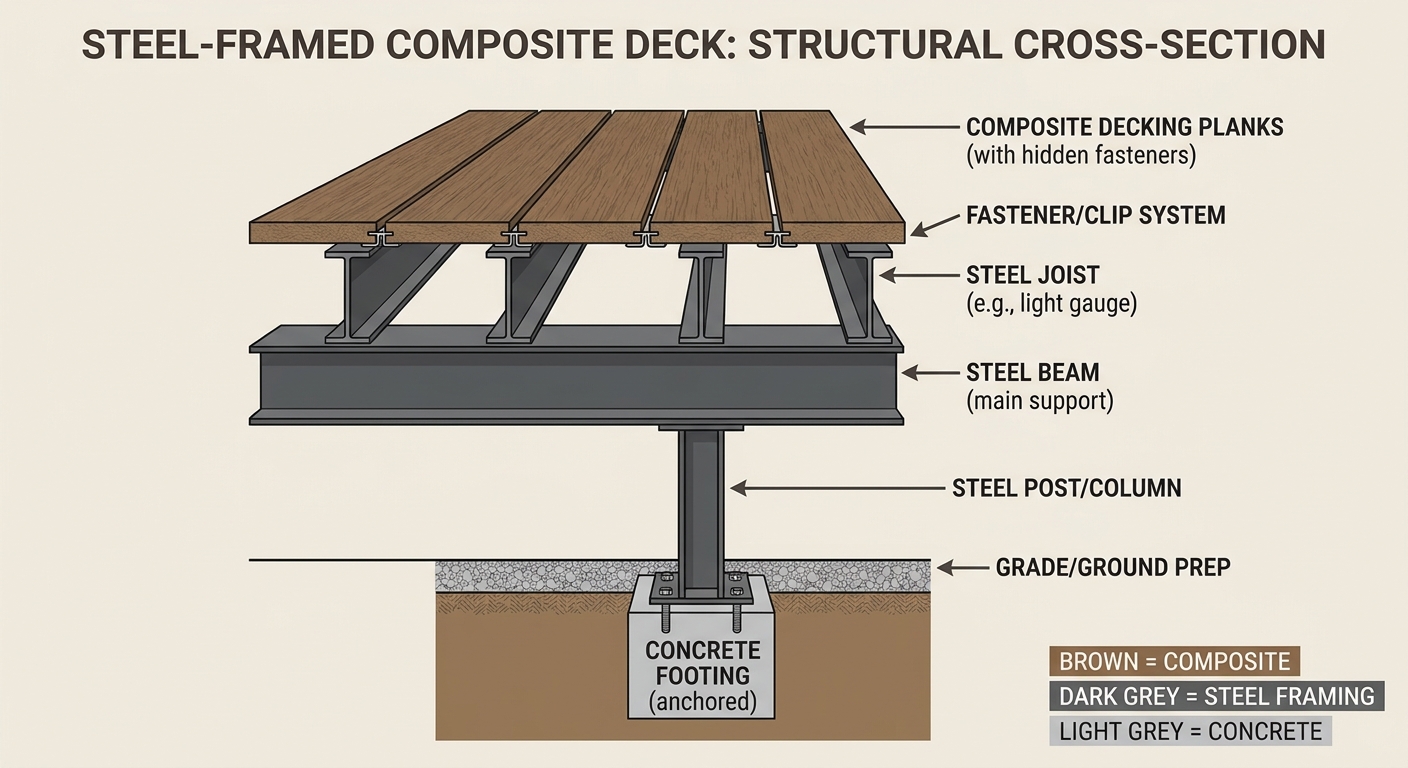
1. Fabricating Hollow Decorative Beams
Solid timber beams add massive dead-weight to ceiling joists and are prone to twisting as they dry out. Professional finish carpenters build hollow box beams using 3/4" hardwood stock joined with lock-miter joints or 45-degree bevels with internal backing blocks.- Technique: Run your stock through the shaper or router table using a dedicated lock-miter bit. Maintain consistent downward pressure with featherboards. When glued up with PVA or polyurethane adhesive, the joint hides end-grain entirely and creates a hollow structural box that hangs easily on a 2x4 cleat mounted to ceiling studs.
2. Wetting Out Hull Fiber with Epoxy
When glassing wooden boat huRead the full article on TigerDen.