Published: February 9, 2026
Stop the frustration of the "mixed bag" fastener world! Learn why we use both Metric and Imperial systems, how to tell them apart, and which essential tools you need to keep your workshop running smoothly.
The Nuts and Bolts... Metric vs. Imperial: Why is it a Mixed Bag?
If you’ve ever spent twenty minutes trying to thread a 5/16" nut onto an 8mm bolt, you know the unique frustration of the "mixed bag" world we live in. You’re elbow-deep in a project, everything is going great, and suddenly your 1/2-inch wrench is just a little too loose, but the 12mm won't fit at all.
Welcome to the great fastener divide. At TigerDen, we believe that the more you know about your hardware, the less time you spend frustrated and the more time you spend creating. Let’s dive into why this confusion exists and how you can master both systems in your shop.
Why the Mixed Bag?
You might wonder why, in a globalized world, we haven't just picked one. The truth is a mix of history, industry, and geography.- The Imperial System (SAE): Derived from old English units, this is the standard in the United States. If you are working on an American classic car or older construction projects, you’ll be reaching for the fractions.
- The Metric System (ISO): Used by the vast majority of the world and heavily favored in modern manufacturing. If you’re working on a Japanese motorcycle, a German appliance, or a bike from the UK, you’re in metric territory.
The "Mixed Bag" happens because materials and components are sourced globally. A piece of machinery might have an American-made engine (Imperial) bolted onto a chassis manufactured in South Korea (Metric).
Understanding the Differences
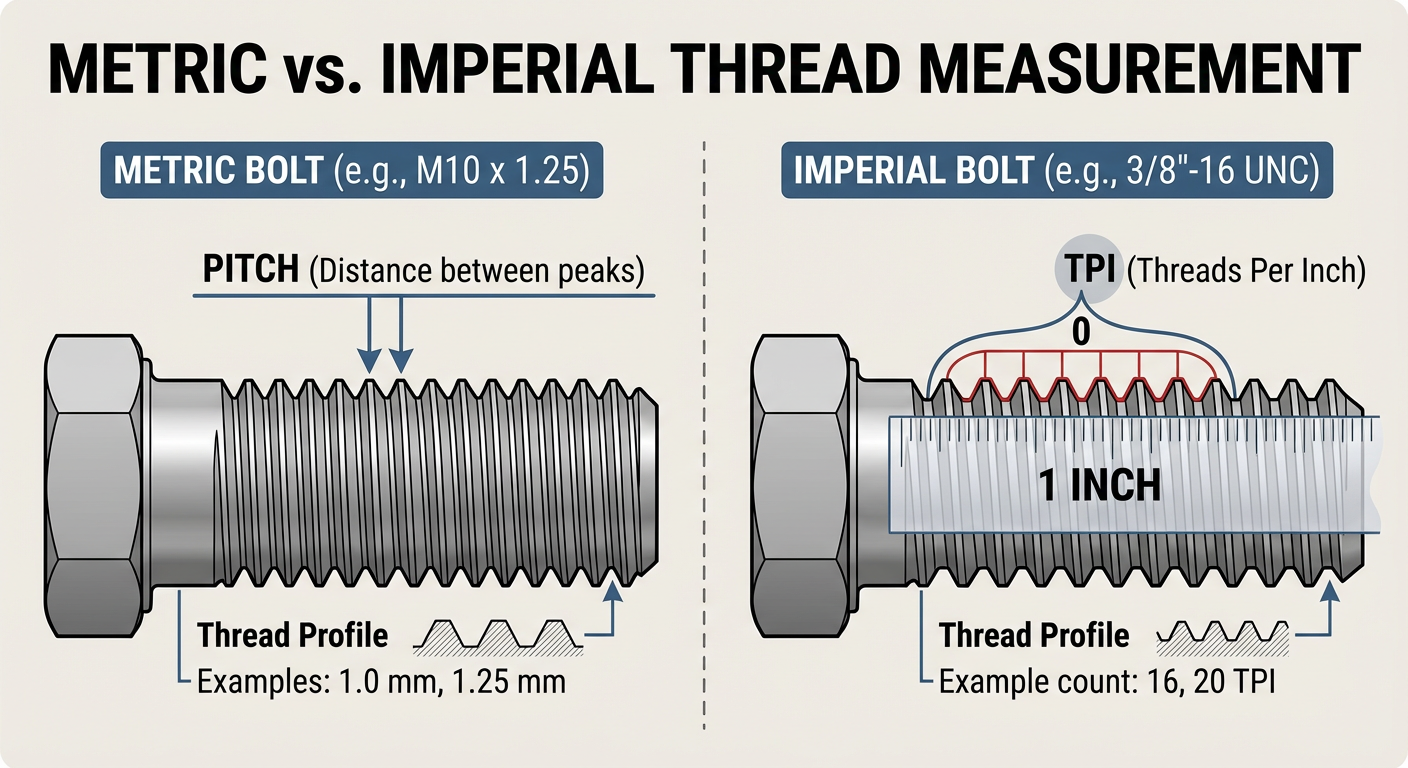
It isn't just about the measurement units; it’s about how the threads are designed.
- Diameter: Metric bolts are measured in millimeters (e.g., M8 = 8mm). Imperial bolts are measured in inches (e.g., 5/16").
- Thread Pitch: This is the big one. Metric measures the distance between threads (e.g., 1.25mm). Imperial measures Threads Per Inch (TPI) (e.g., 18 TPI).
How to Tell the Difference (Without Going Mad)
Identifying a mystery bolt by sight is a skill that takes years, but these tips will get you there faster:
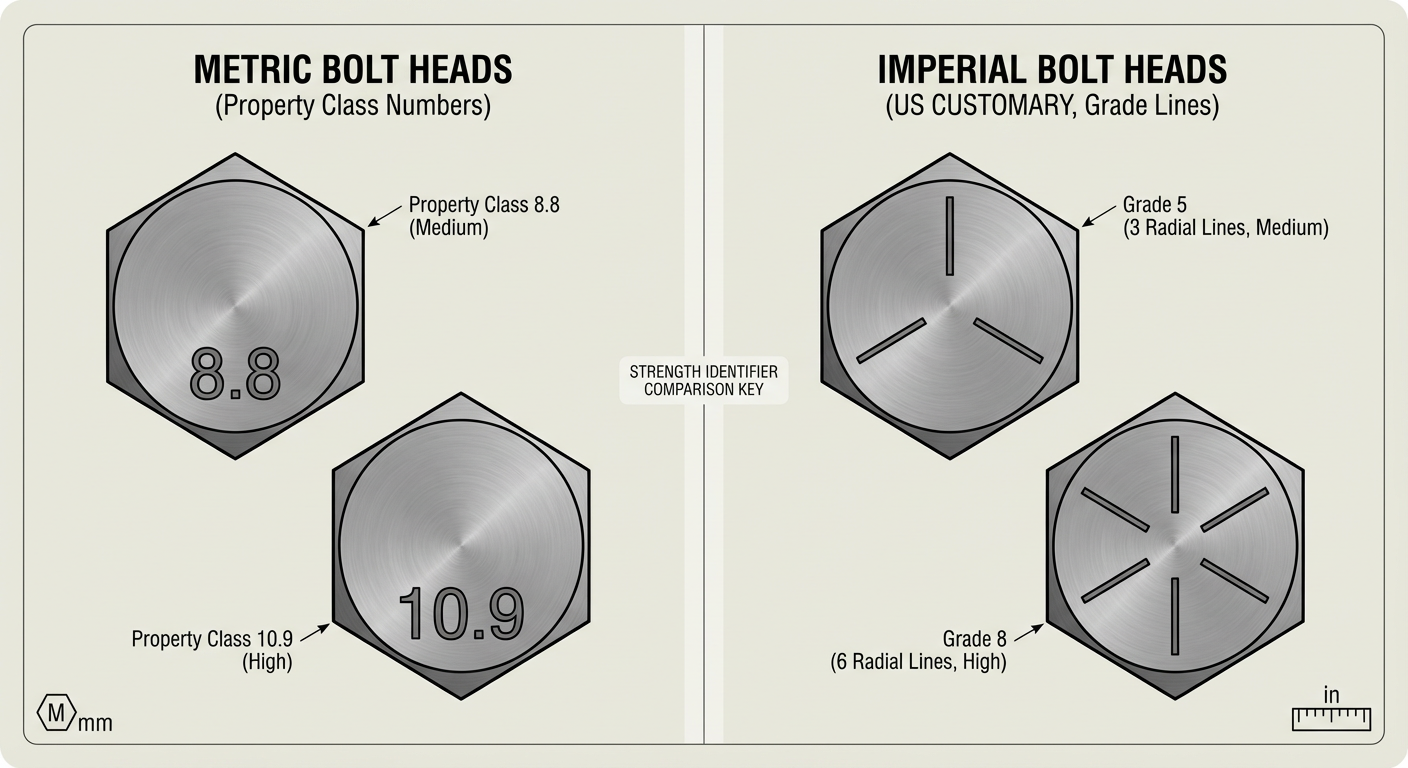
- Look at the Head: Many Metric bolts have numbers stamped on the head (like 8.8, 10.9, or 12.9), which refer to the property class (strength). Imperial bolts usually use radial lines (dashes) to indicate "Grade."
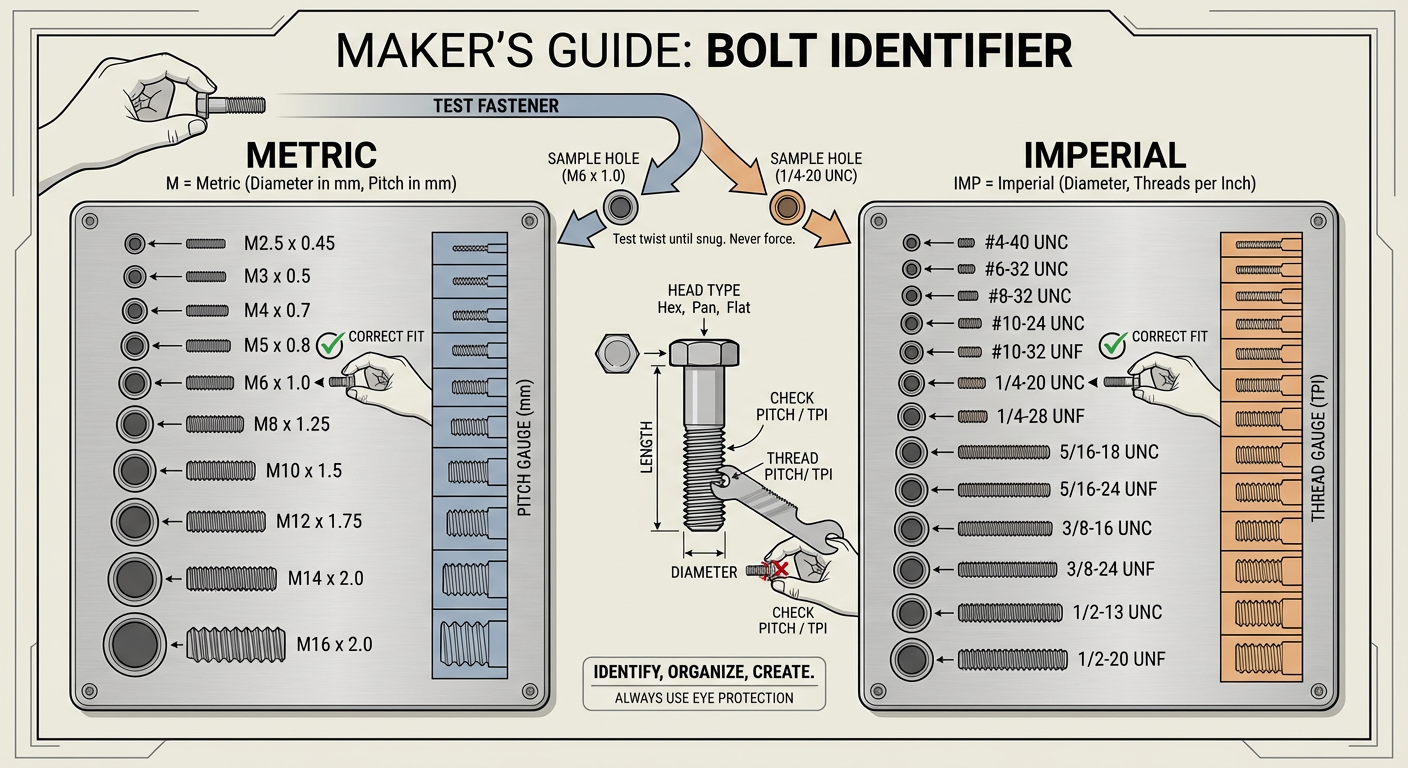
- The "Feel" Test: If a nut starts to thread but gets tight after only two turns, stop. You are likely trying to mix Metric and Imperial. Forcing it will "cross-thread" the hardware, ruining both pieces.
Essential Tools for the "Hybrid" Maker
To stop the "walk of shame" back and forth to the toolbox, you need a strategy. Here is how to kit out your TigerDen workspace:
- Duplicate Your Basic Sets: Do not rely on "adjustable" wrenches for everything. They rounded off more bolt heads than any other tool. Own a full set of Metric and SAE (Imperial) combination wrenches and sockets.
- The Thread Pitch Gauge: This is the most underrated tool in the shop. It looks like a pocket knife full of tiny saws. You press it against the threads; when the teeth fit perfectly, you’ve found your size.
- Digital Calipers: When in doubt, measure the diameter. A quick digital reading will tell you if you're looking at .31 inches (5/16") or 8mm.
- Organize by System: Keep your hardware bins strictly separated. Use a "Go/No-Go" gauge or a nut/bolt identifier board mounted on your shop wall.
Pro-Tip: The "Close Enough" Trap
A 19mm wrench and 3/4" wrench are nearly identical (19.05mm). In a pinch, they might swap. However, using a "close enough" tool on a high-torque bolt is a recipe for a rounded head and a ruined afternoon. Whenever possible, use the tool that matches the system of the fastener.Final Thoughts
The Metric vs. Imperial struggle isn't going away anytime soon, but it doesn't have to slow you down. By investing in a few diagnostic tools—like thread gauges and calipers—and keeping your supplies organized, you can tackle any build that comes across your workbench.What’s the most frustrating "mixed bag" project you’ve ever worked on? Share your stories with the TigerDen community below!
Keep building, keep learning, and stay sharp!