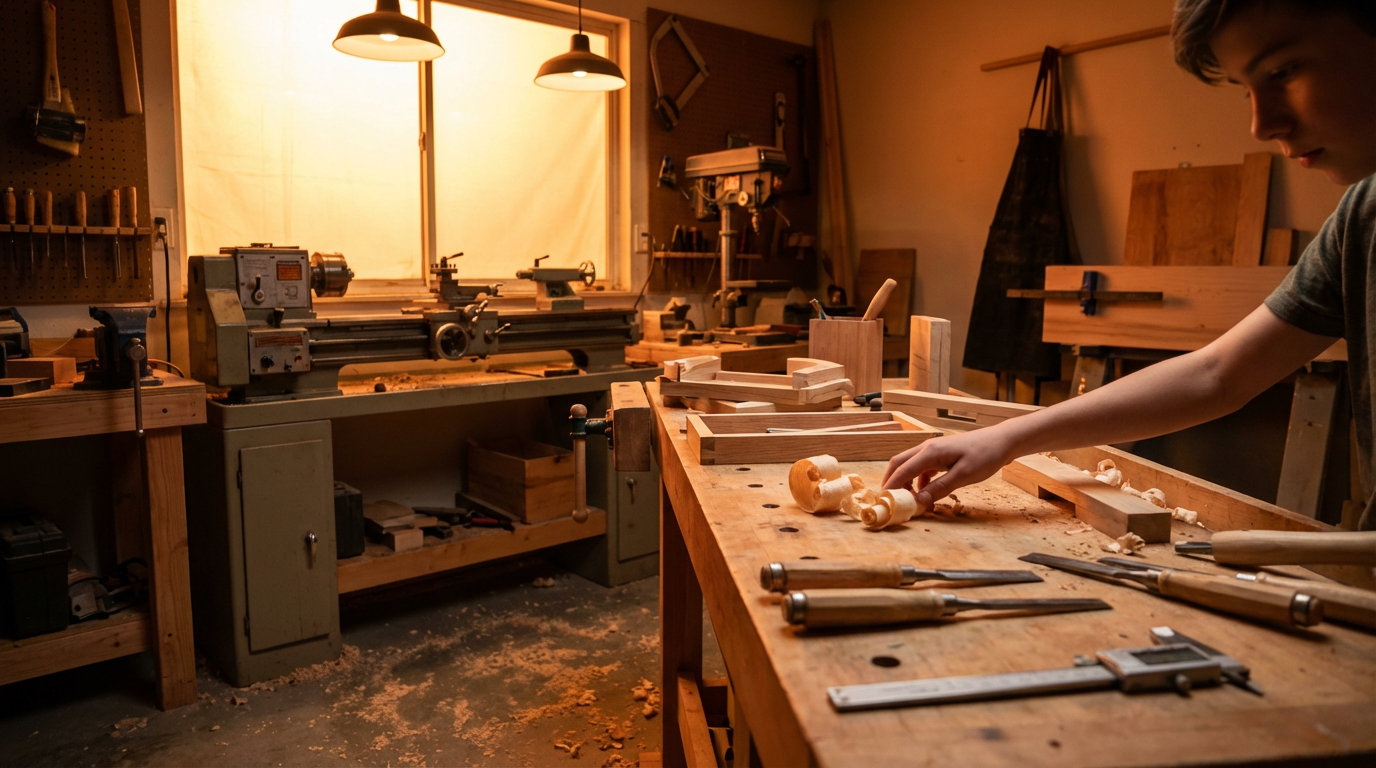
Published: February 8, 2026
Landing a machine shop internship in high school is a game-changer for any aspiring maker. Learn the essential safety protocols, measurement skills, and 'shop etiquette' you need to impress your mentors from day one.
I just got an internship in high school at a Machine Shop - What to learn before I start?
Congratulations! Landing a machine shop internship while still in high school is a massive win. You’ve just opened the door to a world where "close enough" isn't an option and where you get to turn raw blocks of metal into precision components.
Whether you’re nervous or just eager to get your hands dirty, the best way to thrive is to show up with a foundation of knowledge. Here is your roadmap to getting a ‘running start’ before you even clock in for Day One.
1. Safety is the Prime Directive
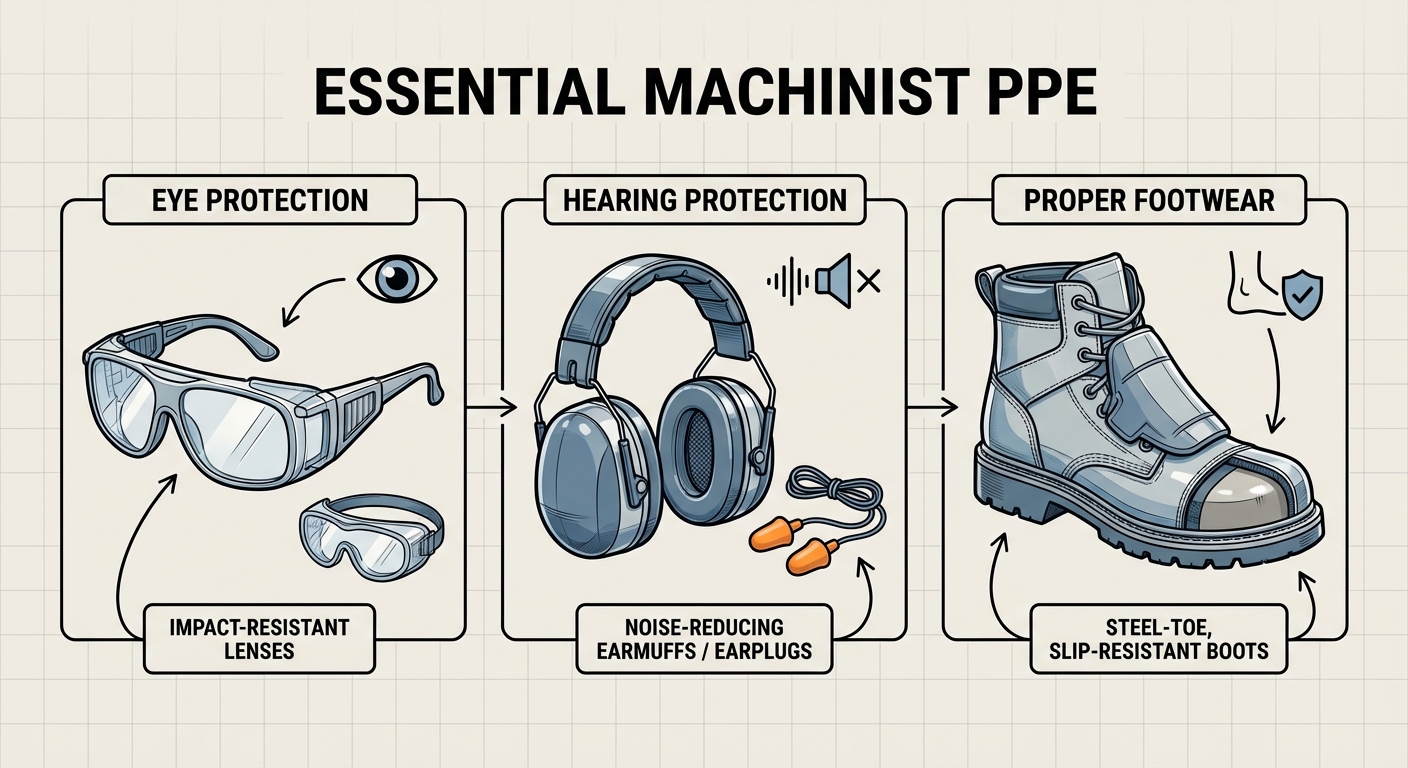
In a machine shop, safety isn't just a lecture; it’s a culture. Before you touch a single dial, you must understand the environment.- PPE (Personal Protective Equipment): Know that safety glasses are non-negotiable.
- Clothing: No loose clothing, no jewelry, and long hair must be tied back. Machines have zero mercy for a loose hoodie string.
- The "Stop" Button: On your first day, ask where the emergency stops (E-Stops) are on every machine you stand near.
2. Master the "Language of Measurement"
Machinists don't use tape measures for everything. You will be working in "thous" (thousandths of an inch). If someone says a part is "two thou over," they mean 0.002 inches.- Read a Caliper: Practice reading digital and dial calipers.
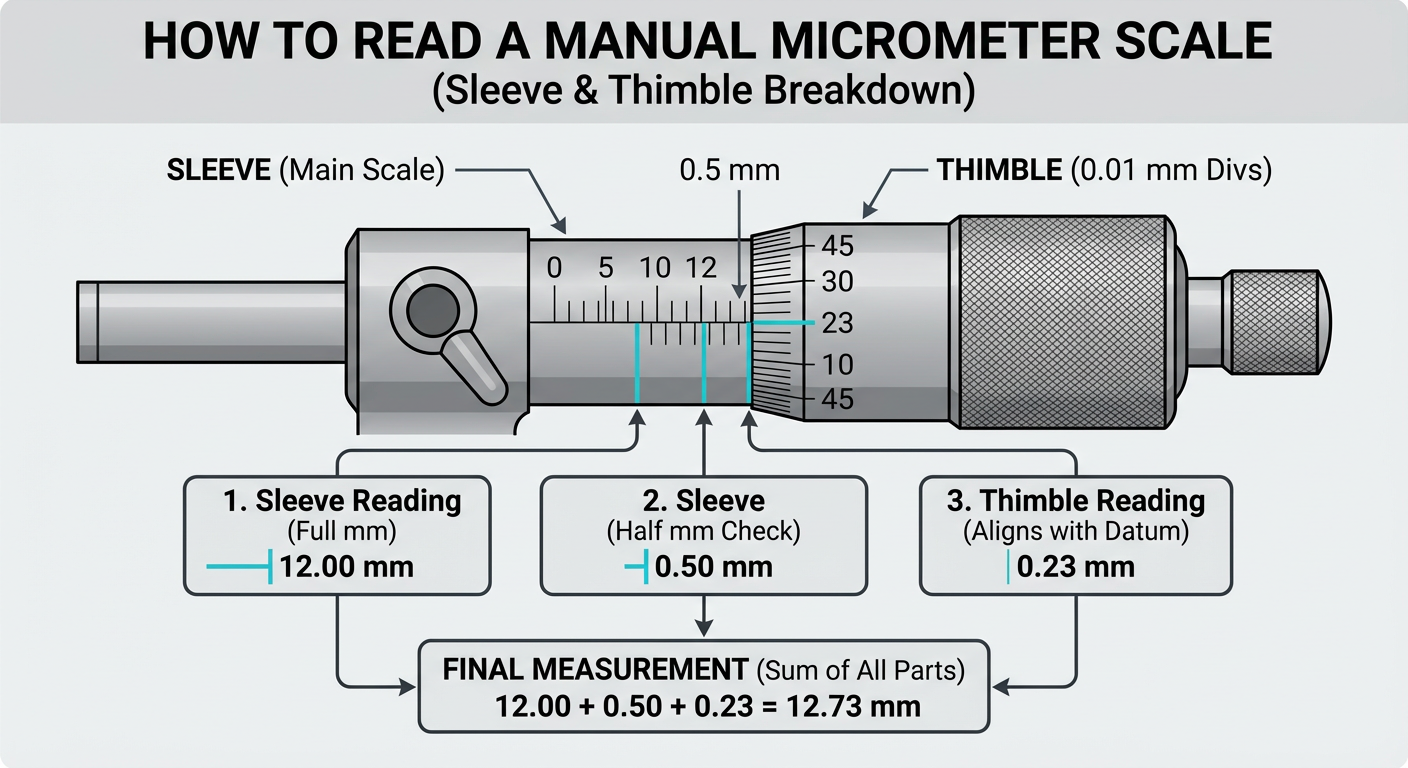
- The Micrometer: This is the gold standard for precision. Learn how to read a standard micrometer scale. If you can show up knowing how to measure a piece of stock accurately, you’ll earn instant respect.
3. Understand Your Materials
You won't just be cutting "metal." You'll be working with different grades of aluminum (like 6061), steels (like 1018 or 4140), and perhaps even brass or plastics.- Feeds and Speeds: Different materials require the tool to spin at different speeds (RPM) and move through the material at different rates (Feed). Understanding the basic relationship—harder materials usually require slower speeds—will put you ahead of the curve.
4. Learn Basic Blueprint Reading
You aren't just making shapes; you are making specific designs.- Orthographic Projections: Learn how a 3D object is represented in 2D (top, front, and side views).
- Tolerances: Look for the +/- signs on a drawing. This tells you how much room for error you have. In some cases, it might be the width of a human hair!

5. Be "The Best Intern Ever" (Soft Skills)
Technical skills are great, but your attitude determines your altitude.- Carry a Notebook: Never ask the same question twice. When a mentor shows you how to zero a machine or change a tool, write it down.
- The "Golden Rule" of Shop Upkeep: A clean shop is a safe shop. If you have downtime, grab a broom or some WD-40 and a rag. Showing initiative by cleaning chips or organizing tooling shows you have a "maker's heart."
- Ask "Why," not just "How": Don't just follow steps. Ask why a certain tool was chosen or why the part is clamped a specific way. This builds your "mechanical intuition."
Conclusion
This internship is a golden opportunity to bridge the gap between "classroom theory" and "shop floor reality." By arriving with a basic understanding of measurements, safety, and drawings, you show your mentors that you are serious about the craft.Welcome to the community, Maker. We can't wait to see what you build!
What are you most excited to learn in the shop? Let us know in the comments below!